Speed Roulette in New Zealand: How It Works
 Available in US
Speed roulette describes how a round is presented; wheel layout, betting rules and results still depend on the game’s stated mechanics.

Table of Contents
- How a Speed Roulette Round Works
- Online Speed Roulette and New Zealand’s Regulatory Context
- What a Roulette Speed Calculator Can—and Cannot—Show
- Roulette Strategy and the Limits of Betting Systems
- Free Play, Green Zeroes and Triple-Zero Claims
- Reading the Bets Before the Spin
- Roulette Variants Behind the Speed Label
- Using a Demo to Understand French Roulette Rules
- Practical Tips for Interpreting Roulette Results
- Wheel Layouts, Pocket Counts and House Edge
How a Speed Roulette Round Works
“Speed” describes the pace at which a roulette game is presented, not a separate kind of wheel. In a live-table setting, the label points to a round being followed in real time rather than to a different set of numbered pockets or a new betting system. The distinction matters: a faster presentation can change how quickly events unfold on screen, but it does not, by itself, change the structure of roulette.
The exact format cannot be inferred from the name alone. It does not establish how a particular table is filmed, who operates it, how long betting remains open, or what interface is used. Those details depend on the game. A live speed roulette title should therefore be understood as a description of presentation and pace unless the table’s own rules specify further mechanics. In particular, the word “speed” is not evidence that every provider uses the same timing or round sequence.
At a basic level, roulette is organised around a wheel, a ball and wagers associated with the result. A round moves from the opportunity to place or adjust bets to the spin and then to the displayed outcome. Faster pacing compresses the time between these stages or makes the overall sequence feel more immediate. It does not turn the wheel into a different game. The pace may affect how much time is available to observe the interface and follow the transition from one round to the next, while the underlying roulette structure remains recognisable.
Choosing a speed roulette site in New Zealand means weighing the information available about each operator before you play. Use these verdicts as a concise reference, and check the details that matter to you.
License: Tobique Gaming Commission, licence no. 0000064 Neospin lists a licence from the Tobique Gaming Commission, licence no. 0000064.
License: Tobique Gaming Commission, licence no. 0000002 Ricky Casino lists a licence from the Tobique Gaming Commission, licence no. 0000002.
License: Curaçao Gaming Authority, licence no. OGL/2024/165/0185 BitStarz lists a licence from the Curaçao Gaming Authority, licence no. OGL/2024/165/0185.
License: Tobique Gaming Commission, licence no. 0000091 7Bit Casino lists a licence from the Tobique Gaming Commission, licence no. 0000091.
License: Malta Gaming Authority, licence no. MGA/B2C/370/2017 Play Grand lists a Malta Gaming Authority licence, no. MGA/B2C/370/2017.
Payout speed: 1-3 business days Wintino’s stated payout speed is 1–3 business days.
Payout speed: 1-3 business days Lamabet’s stated payout speed is 1–3 business days.
License: 07017519840 · Payout speed: 1-3 business days Zotabet lists licence number 07017519840 and a payout speed of 1–3 business days.
License: Malta Gaming Authority, licence no. MGA/B2C/394/2017 N1 Casino lists a Malta Gaming Authority licence, no. MGA/B2C/394/2017.
This difference is especially relevant in a live presentation. The table is not merely a static diagram: the round is shown as an unfolding event, and the player follows the displayed action as it occurs. A quicker rhythm can make it easier to lose track of where one round ends and another begins, particularly when attention is divided between the wheel, the betting area and the result display. The practical change is therefore one of tempo and attention, not proof of altered odds or a special way for the ball to behave.
The table’s rules remain the important reference point. European Roulette, for example, has 37 pockets, one of which is zero; its house edge is 2.70%. American Roulette has 38 pockets, including both a single zero and a double zero, and its house edge is 5.26%. These are differences in wheel layout and the associated mathematics. A faster interface does not remove a pocket, add one, or make an American wheel equivalent to a European one. The game’s name and rules, rather than its pace label, identify which layout is in use.

A round can also seem faster because less time passes between visible events, even if the underlying stages are unchanged. That impression should not be confused with a change in the probability of any result. The speed at which a table presents rounds concerns the experience of following play; the wheel configuration concerns the possible outcomes. Keeping those dimensions separate avoids reading a quick sequence as a special roulette mechanic.
For the same reason, the term “live” should not be taken to settle every question about how the game operates. It signals a live-table presentation, but does not establish whether a particular game uses a specific camera arrangement, dealer procedure, betting window or interface feature. Those particulars must be read from the table information itself. Without such detail, claims about the exact duration or sequence of a live speed roulette round would go beyond what the label supports.
The difference between speed and structure is useful when comparing titles. Two games may both be described as fast while using different roulette layouts; conversely, the same layout can be presented at different paces. A quick round is not necessarily a new roulette variant, and a slower round is not necessarily a different wheel. The title alone cannot identify the number of pockets or the applicable house edge.

Following a speed roulette live table therefore involves tracking a compact sequence rather than assuming that speed changes the rules. The pace can make the interval for viewing and responding feel shorter, but it does not establish a new betting principle. When the round ends, the result is still determined by the roulette wheel and the rules attached to that table. Distinguishing the live presentation from the wheel’s specification gives a clearer account of what “speed” means—and of what it does not mean.
Online Speed Roulette and New Zealand’s Regulatory Context
The pace of a live roulette game does not determine whether its provider may legally offer online casino gambling in New Zealand. That question belongs to the country’s regulatory framework, not to the rules used to settle a roulette round. The distinction matters in 2026, as the market moves from a period without domestic online-casino licensing to a newly established licensing regime.
The Online Casino Gambling Act 2026 took effect on 1 May 2026, creating New Zealand’s first domestic system for licensing online casino providers. The Department of Internal Affairs (DIA) is the primary gambling regulator and oversees the framework. The Gambling Commission has a separate licensing role: it considers and decides casino licence applications, issues online casino licences and approves changes to licence conditions.

This division separates regulatory oversight from licensing decisions. It does not make the DIA the issuer of online casino licences, nor does it make the Gambling Commission responsible for roulette rules. Those rules concern the game; the licensing framework concerns whether and on what conditions a provider may operate.
The transition period
The Act sets a transition running from 1 May to 1 December 2026. Providers that were already offering services to people in New Zealand before the start of that period may continue until 1 December, subject to the Act’s transitional provisions. This temporary permission is not the same as holding a licence under the new regime. Providers that have not applied for a licence must cease conducting online casino gambling in New Zealand by 1 December 2026.
The full licensed system is not expected to be operational until 2027. The transition therefore does not establish that every online casino available to New Zealand residents is licensed locally. Nor does the prospect of a future licence amount to approval in the present. Operators without a licence may face enforcement action and fines of up to NZ$5 million.

Domestic online casinos remain prohibited under the Gambling Act 2003; the 2026 Act establishes a framework for licensing online casino gambling rather than permitting casinos to be based in New Zealand. Before the new law, online casino gambling supplied from outside the country was not licensed or supervised by a New Zealand regulator. Customers using offshore websites in that period had no domestic government recourse. Offshore sites may be accessible, and players do not incur a fine or criminal prosecution merely for using one, but access should not be confused with local regulatory protection.
Advertising and customer checks
The transition also restricts promotion. Online casino gambling services must not be advertised to people in New Zealand during this period. A page describing access to speed roulette online should therefore not be read as an endorsement or an invitation to gamble. The legal status of a provider and the limits on advertising are separate from the speed or presentation of a game.
Licensed operators must introduce stricter age and identity verification systems. These checks are part of the regulatory safeguards attached to the new framework, rather than features of roulette itself. A provider’s description of a fast live table cannot establish that it has completed the required verification or holds a local licence. The licensing and verification position should be assessed independently of the game’s branding.
Legal Risk
Operators without a license under the new regime may face enforcement action and fines of up to NZ$5 million.
Bonus terms and withdrawals
Promotional offers have conditions that affect whether bonus funds or related winnings can be withdrawn. The terms may specify eligibility, wagering, expiry, game contribution and withdrawal restrictions; those details should be distinguished from the underlying rules of a casino game.
The stated conditions require bonus money to be wagered 50X within 30 days. Winnings from free spins must be wagered 50X within 7 days. A withdrawal request voids all active or pending bonuses. These conditions can affect an account even when the original play involved a speed roulette casino game, so the promotional terms should not be mistaken for a change to the game’s rules or for a guarantee that bonus funds will be withdrawable.
The new licensing framework is consequently relevant to online access, operator oversight, verification and advertising, while bonus conditions govern the treatment of promotional funds. Neither set of rules changes what a roulette result means. In 2026, the transition dates and the distinction between existing providers and locally licensed operators are central to understanding the regulatory context.
What a Roulette Speed Calculator Can—and Cannot—Show
A roulette speed calculator can make probability comparisons clearer, but its output describes possible outcomes under stated rules. It cannot identify the result of a future spin. The distinction matters whether a game is presented as automated, live or fast-paced: the pace of play does not turn past results into information about what the wheel will produce next.
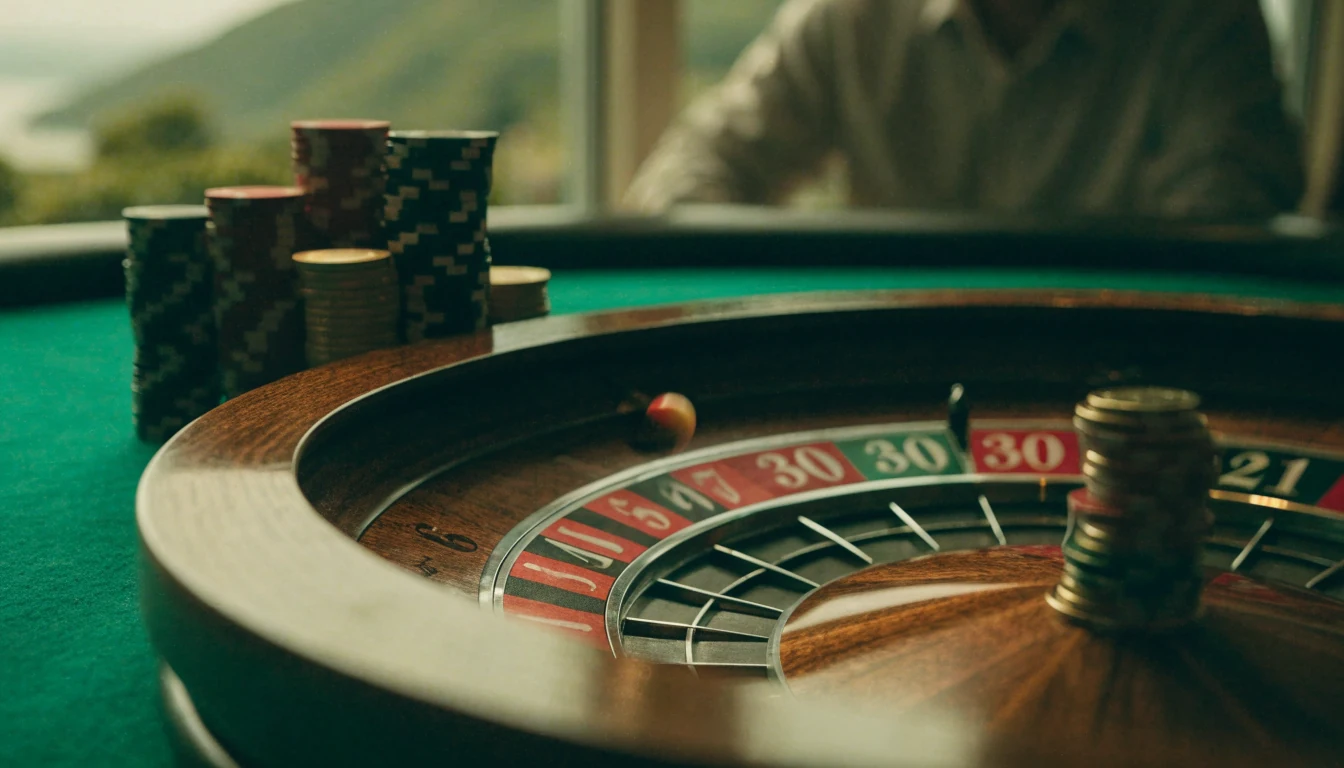
A useful calculation begins with a defined question. It might compare the chance of a particular bet winning under different wheel layouts, or show how the possible outcomes are distributed. The answer depends on the wheel and the bet being considered. If those inputs are wrong or incomplete, the displayed result may be mathematically consistent while still describing a different game from the one being played.
The calculator’s role is therefore descriptive. It can quantify a probability, compare stated assumptions, or help explain why two roulette formats do not offer identical prospects. It does not observe a hidden pattern or adjust the wheel. Nor does a sequence of earlier results supply a reliable input for forecasting the next one: roulette spins are independent, so previous outcomes do not change the probabilities on a future spin.
That principle also limits what a history chart can establish. A run of the same colour, or an apparent alternation between colours, is a record of what has happened. It does not show that another outcome is now more likely. A calculator may summarise the record, but summarising is not prediction. Treating a recent sequence as a signal risks confusing a description of past events with evidence about the next event.
Payout percentages can be used for a separate kind of comparison, though their provenance should be kept visible. One specialist review reports a payout percentage of 94.70% for American roulette and 97.30% for European roulette. Those figures are reported estimates, not a forecast for an individual session or a guarantee about a particular table. A percentage summarises a game-level relationship; it does not mean that a player will receive that proportion back over a short run.
Features 37 pockets with a single zero and a house edge of 2.70%.
Features 38 pockets with a single and double zero and a house edge of 5.26%.
Uses a single-zero layout with a house edge of 1.35% when La Partage or En Prison apply.
The same caution applies to a roulette speed calculator that presents precise-looking results. Precision in a calculation is not certainty about an outcome. A probability can be calculated from the rules and assumptions entered, but it remains a statement about likelihood, not knowledge of what will happen. If the calculator does not identify its wheel assumptions or the bet being analysed, its result should not be treated as a complete comparison.
Used within those limits, a calculator can clarify the mathematics behind roulette and make stated differences easier to inspect. It cannot make a fast game predictable, read meaning into a streak, or convert the previous spin into a forecast. Each real-money bet can lose, and the displayed probability does not remove that possibility.
Roulette Strategy and the Limits of Betting Systems
A betting system can organise how much is staked and when a player chooses to stop. It cannot change the rules that determine a roulette result. In speed roulette, the quicker pace may leave less time between decisions, but it does not turn a staking pattern into a method for controlling the wheel.

The distinction is between managing a stake and improving the underlying terms of a bet. A player might set a fixed stake, increase it after a loss, or change it after a win. These approaches alter the sequence and size of wagers; they do not alter the chance of a particular outcome on a future spin. Nor can a progression ensure that a losing run ends before the available bankroll does.
This matters especially with systems that call for raising stakes after losses. The appeal is often that a later win could recover earlier losses. But each increase also exposes more money to loss, and a win is not guaranteed to arrive at a point that makes the sequence profitable. A system may therefore produce a different pattern of wins and losses without removing the possibility of a substantial net loss. It should not be treated as a winning strategy.
Roulette spins are independent events. Previous results do not influence the probability of outcomes on later spins. A run of one colour, for instance, does not make the other colour due on the next spin. Equally, a recent win does not make another win more likely. Staking rules based on a supposed correction in the sequence rely on a relationship between spins that roulette does not provide.
The house edge sets a further limit. On single-zero European Roulette, the standard house edge is 2.70%. It describes the mathematical advantage built into the game over repeated play under its standard rules; it is not a prediction of the result of an individual spin. A short session can end in a win or a loss, but a staking progression does not erase that edge. The size and timing of bets can affect the amount at risk, not the underlying game terms.
For that reason, “best strategy” has no universal answer if it is meant to identify a system that guarantees profit. A more defensible approach is to treat any staking plan as a spending limit or organisational choice, not as a way to forecast outcomes. A fixed stake can make the amount committed easier to track, while a predetermined stopping point can limit how long play continues. Neither changes the odds, and neither prevents every loss.
- Settle a staking plan before play
- Use a fixed stake to track spending
- Set a predetermined stopping point
- Improvise stake increases during streaks
- Use progression to recover losses
- Assume a system removes the house edge
The faster presentation of speed roulette can make rapid decisions feel natural. That is a reason to settle a staking plan before play rather than improvising increases in response to a streak. If the pace makes it difficult to keep track of the stake or decisions, pausing or stopping is more reliable than trying to compensate with a more complex progression.
No roulette system makes real-money bets safe. Outcomes remain random, and every bet can lose. Stakes should not exceed what can be afforded to lose; a strategy cannot make otherwise unaffordable losses manageable.
Free Play, Green Zeroes and Triple-Zero Claims
Free play can make a speed roulette table available without placing a cash stake, but it does not change the wheel’s probabilities. A demo round and a real-money round may look similar on screen; the difference is whether money is at risk and whether the result can produce a cash balance. Neither the faster pace nor a green zero alters the number of pockets or the chance attached to a bet.
The same distinction applies when a game is described as free through a bonus. Bonus funds and free spins are subject to their own conditions, so the displayed balance should not be treated as immediately withdrawable cash. In New Zealand, advertised bonuses may set eligibility rules, wagering requirements, expiry periods, game-contribution terms and restrictions on withdrawals. The specific terms matter: bonus money must be wagered 50X within 30 days, while winnings from free spins must be wagered 50 times within 7 days. A withdrawal request voids all active or pending bonuses. These conditions can affect whether bonus-related winnings remain available, independently of the roulette outcome.

Green-zero wording also needs to be read carefully. A green pocket is a visual feature of the wheel, not a separate betting advantage. A claim about “triple-zero” roulette implies a wheel with a particular pocket arrangement, but the label alone does not establish its rules, the number of pockets, or the house edge. Those details must be provided by the game description before its probabilities can be assessed. A green graphic, animation or promotional phrase cannot substitute for a stated wheel layout.
The zero rules can matter for certain bets on French Roulette. Its wheel uses the same single-zero layout as European Roulette, while rules such as La Partage and En Prison change the treatment of eligible even-money outside bets when zero appears. Under La Partage, half of the stake is returned and the remainder is lost. En Prison instead carries the bet to the following spin: a winning result returns the original stake without extra winnings, while a losing result forfeits it. These rules concern the settlement of particular bets; they do not turn free play into a different probability model or make every wager eligible.
A practice mode can therefore help distinguish the interface, bonus balance and settlement rules, but it cannot demonstrate that a particular result is due or that a streak predicts the next spin. A free round has no cash loss attached to the stake, yet its outcome remains a roulette result rather than evidence of a repeatable pattern. Likewise, a bonus does not change the wheel merely because it funds a wager. The relevant questions are what wheel is being used, which bets qualify for any zero rule, and what conditions govern the bonus balance.
Bonus Terms
Bonus money must be wagered 50X within 30 days, while winnings from free spins must be wagered 50 times within 7 days.
Descriptions of “speed triple roulette” should not be treated as complete specifications. Speed refers to pace; “triple zero” is a claim about the wheel that requires separate confirmation. Without stated pocket and settlement details, no sound comparison of its odds follows from the name alone. Regardless of format, real-money bets can lose, and play should not involve more than can be afforded to lose.
Reading the Bets Before the Spin
Understanding how to play speed roulette starts with recognising where a bet is defined. Some bets are selected directly from the table layout. Others are called bets, grouped by the sequence of numbers around the wheel. The distinction matters because the table’s arrangement and the wheel’s order are not the same reference system.
A layout bet is identified by the position of a number or group of numbers on the betting interface. The player selects the relevant area on the table, and the selection indicates which outcome or outcomes the stake covers. This is a visual way to read the wager: the marked part of the layout shows its scope. It does not, by itself, indicate where those numbers sit around the physical wheel.
Called bets refer instead to number groupings based on wheel positions. Their boundaries follow the wheel’s sequence, rather than neighbouring spaces on the table layout. A called bet therefore cannot be identified merely by looking for adjacent numbers on the betting grid. The grouping needs to be understood in relation to the wheel order, even when the interface provides a control for placing it.
This distinction can be useful when the betting period is brief. Before confirming a selection, the bet’s name and displayed coverage should agree: a table-layout selection is read from the marked grid, while a called bet is defined by its wheel-based grouping. If the interface presents both kinds together, treating every group as though it were formed by nearby table cells can lead to a mistaken reading of what has been covered.
The bet category describes placement, not a prediction about the result. A called bet does not become more likely because its numbers are adjacent on the wheel, and a table-layout grouping does not acquire a different meaning because it appears visually compact. The chosen category simply determines which outcomes are included in that wager.
For a clear record of a round, the useful detail is the selection shown before the spin: whether it was made from the table layout or placed as a called bet, and which outcomes the interface associates with it. That makes the wager easier to interpret when the result appears, without confusing wheel order with table position.
Roulette Variants Behind the Speed Label
“Speed” refers to the pace of a roulette game, not to a distinct wheel design or set of odds. A faster presentation does not, by itself, change the pockets or the probabilities attached to them. Those depend on the roulette variant and its rules.
The contrast between European and American Roulette illustrates why the variant matters. A European wheel has 37 pockets: numbered pockets and a single zero. Its house edge is 2.70%. The American layout has 38 pockets, with both a single zero and a double zero, and its house edge is 5.26%. The additional pocket changes the probability structure; the game’s pace does not.
Payout Percentage Comparison
A specialist review reports a payout percentage of 97.30% for European Roulette and 94.70% for American Roulette.
Payout percentages are sometimes used to express the same relationship from the player-return perspective. A specialist review gives European Roulette a 97.30% payout percentage and American Roulette a 94.70% payout percentage. These figures describe the variants rather than a benefit created by a speed setting, and should be understood as figures reported by that type of source, not as a universal specification for every table.
A game labelled as speed roulette may therefore share its underlying wheel type with a more slowly presented table. The label alone does not establish whether the game uses a single-zero or double-zero layout. The relevant details are the pocket arrangement and the rules in force, not the title’s suggestion of pace.
This distinction is useful when comparing games: the speed label concerns presentation, while wheel design determines the distribution of possible outcomes and affects the house edge. A quick round and a conventional-paced round can use the same variant, while two games with similar pacing can use different wheel layouts. The variant name and stated rules are consequently more informative about the mathematical structure than the speed descriptor alone.
Using a Demo to Understand French Roulette Rules
A demo can make French Roulette’s zero rules easier to follow by showing what happens to an eligible even-money outside bet when zero appears. The key distinction is between La Partage and En Prison: both alter the treatment of that bet, but they do so in different ways. La Partage is a French Roulette rule, rather than a feature of roulette generally.
With La Partage, zero results in half the stake being returned and the other half being lost. The bet does not remain active for another spin. In a demo, this outcome can be compared with an ordinary win or loss to see why zero does not have the same financial effect on an eligible bet under this rule.
En Prison handles zero differently. Instead of settling the bet immediately, the table carries it forward. If the next spin wins, the original stake is returned, but there is no additional profit. If that spin loses, the stake is collected. A demo can therefore clarify that a carried bet is not a fresh wager and that a winning follow-up does not pay out as an ordinary even-money win.
These rules concern even-money outside bets only; they do not change the settlement of every bet on the layout. Their effect is tied to zero landing, so a demo is most informative when it lets the result and the subsequent treatment of the stake be observed clearly. A faster presentation may shorten the time between rounds, but it does not alter the meaning of either rule.
When La Partage or En Prison applies, French Roulette’s house edge is 1.35%. This figure describes the effect of those rules over play; it does not promise a particular result in a short session or ensure that an individual bet will be returned. Demo play can illustrate the settlement process, but it cannot remove randomness from real-money play. Every real-money bet can lose, and no more should be risked than can be afforded to lose.
Practical Tips for Interpreting Roulette Results
A run of red outcomes, repeated numbers or a long interval without a particular result can appear meaningful, especially when spins follow one another quickly. The sequence describes what has happened; it does not establish what will happen next. Roulette spins are independent, so previous results do not change the probability of an outcome on a future spin.
Attention Roulette spins are independent events; previous results do not change the probability of an outcome on a future spin.
This distinction matters when reviewing a session. A streak is a feature of the observed results, not evidence that the wheel is due to switch colour or repeat a number. Likewise, a result that has not appeared for some time has not accumulated a greater chance of landing. Each new spin remains uncertain, regardless of the pattern that preceded it.
Speed roulette tips are therefore most useful when they concern the interpretation of play, not forecasts. A simple record of outcomes can help distinguish what occurred from what was expected, but it cannot turn a sequence into a reliable signal. The faster pace may also make a short run feel more persuasive because outcomes arrive close together. Keeping observations separate from predictions helps prevent that impression from being mistaken for evidence.
Any account of results should also keep losses in view. A winning run does not establish that a session will remain profitable, and a losing run does not guarantee a recovery. Roulette outcomes are random, and every real-money bet can lose. No pattern in completed spins removes that uncertainty; play should not involve money that cannot be afforded to lose.
Wheel rules affect the terms of eligible bets, but they do not make past outcomes predictive. French Roulette offers the best odds for even-money bets because La Partage and En Prison can apply when zero lands. That is a difference in the treatment of certain bets, not a reason to infer what the next spin will produce.
A useful interpretation of a roulette result is narrow: it records an outcome under the rules in force for that bet. It does not reveal a hidden cycle, prove that a wheel is favouring a colour, or show that a particular number is now more likely. Keeping that boundary clear makes results easier to assess without turning chance into a supposed forecast.
Wheel Layouts, Pocket Counts and House Edge
A speed roulette wheel is defined by the pace of play, not by a separate pocket arrangement. The layout still matters because the number of pockets and the rules attached to zero determine how often a winning result is possible and how much of the stake is exposed to the house edge.
European Roulette has 37 pockets: one is zero and the remainder are numbered. Its house edge is 2.70%. American Roulette has 38 pockets, with both a single zero and a double zero, and its house edge is 5.26%. The additional pocket changes the probability of a winning result on the same bet, even when the table layout and betting choice appear otherwise familiar.
Mini Roulette has a markedly different structure. Its 13 pockets are associated with a house edge of 7.89%. On tables where La Partage applies, that edge falls to 3.85%. The rule affects eligible even-money outside bets when zero lands; it does not change the pocket count or apply to every kind of wager. French Roulette uses a single-zero layout and can also offer La Partage, reducing the effective house edge on eligible even-money bets when zero appears.
A specialist review reports that some American roulette tables in Atlantic City return half the stake on even-money bets when either zero or double zero lands. This should be treated as a table-specific rule, not as a standard feature of American Roulette. The usual American layout still has its higher house edge, and the presence of a half-stake rule must be confirmed in the table rules before its effect is assumed.
These comparisons show why the wheel and its rules deserve attention separately from the speed of a game. A faster round does not itself reduce the house edge, alter the pockets, or make an outcome more predictable. Roulette results remain random, and every real-money bet can lose. The figures describe the mathematical effect of the stated layouts and rules; they do not predict an individual session. No betting system can remove the house edge, so stakes should remain within what can be afforded to lose.
Written by the editors at Casino Experts NZ.