Online Craps in New Zealand: How Tables Work
 Available in US
Explore how craps rolls and bets work online, and what free games and different table formats can reveal.

Table of Contents
- How Online Craps Tables Work
- Free Craps Games: What Practice Can and Cannot Show
- New Zealand’s Online Casino Licensing Transition
- The Come-Out Roll and the First Pass-Line Decisions
- What Happens After a Point Is Set
- Using Free Online Craps for Familiarisation
- Assessing Craps Bets Without a Best-Casino List
- Odds, Commissions, and the Limits of Craps Strategy
- RNG Tables and Live Craps Simulators
- Real-Money Craps and Wagering Requirements
How Online Craps Tables Work
An online craps table reproduces the central feature of the physical game: bets concern the outcome of rolls made with two dice. The online format changes how those rolls are generated and shown. A digital table uses a random number generator (RNG), while a live-dealer game uses real dealers. In either format, the two dice remain the basis of the game; the difference is whether the roll is produced digitally or by a dealer.
Digital tables
On a digital table, the roll is generated by an RNG rather than by a physical pair of dice being thrown at a table. The game presents that result through its software interface. This means the display, rather than a real-time dealer, is the immediate source of what the player sees when a roll occurs.
A screen can bring the dice and betting area together in one view, making the connection between a wager and a roll visible. The interface represents a craps table, but it is still a digital presentation: the dice shown on screen do not establish that physical dice were rolled. The outcome comes from the RNG.
Choosing an online craps site in New Zealand involves checking what is known about each operator before deciding where to play. This overview highlights the available licensing and payout information relevant to the options listed.
License: Tobique Gaming Commission, licence no. 0000064 Neospin lists a licence from the Tobique Gaming Commission, licence no. 0000064.
License: Tobique Gaming Commission, licence no. 0000002 Ricky Casino lists a Tobique Gaming Commission licence, no. 0000002.
License: Curaçao Gaming Authority, licence no. OGL/2024/165/0185 BitStarz lists a Curaçao Gaming Authority licence, no. OGL/2024/165/0185.
License: Tobique Gaming Commission, licence no. 0000091 7Bit Casino lists a Tobique Gaming Commission licence, no. 0000091.
License: Malta Gaming Authority, licence no. MGA/B2C/370/2017 Play Grand lists a Malta Gaming Authority licence, no. MGA/B2C/370/2017.
Payout speed: 1-3 business days Wintino’s listed payout speed is 1–3 business days.
Payout speed: 1-3 business days Lamabet’s listed payout speed is 1–3 business days.
License: 07017519840 · Payout speed: 1-3 business days Zotabet lists licence number 07017519840 and a payout speed of 1–3 business days.
License: Malta Gaming Authority, licence no. MGA/B2C/394/2017 N1 Casino lists a Malta Gaming Authority licence, no. MGA/B2C/394/2017.
That distinction matters when describing an online craps game. A digital table is not a recording of a dealer’s game, nor does it require a live dealer to generate each result. It is a software-based version of craps in which the RNG produces the roll and the interface displays it. The two-dice structure remains, even though the underlying mechanism differs from a physical table.
Live-dealer tables
A live-dealer table uses real dealers rather than an RNG to produce the game’s rolls. Its presentation is therefore different from that of a digital table: the game is shown as a live dealing experience, with the dealer forming part of what is presented. The defining distinction is the source of the roll, not a different set of dice or a different basic concept of craps.
For someone comparing formats, “live” identifies a real-dealer game; it does not mean that the game is simply a digital table with a more detailed appearance. Conversely, a digital table does not become live because its interface resembles a physical casino table. The relevant question is whether the result is generated by an RNG or by a real dealer.
The two formats can both be understood as online versions of the same dice game. Each centres on rolls made with two dice, but their presentation and roll-generation methods differ. That distinction is more useful than treating every online table as if it worked in the same way.

What the table format does—and does not—tell you
The format describes how the game is presented and how its rolls are generated. It does not, by itself, explain the rules for a particular wager or what happens after a roll. Those are separate questions. A player can identify whether a table is digital or live without yet knowing the consequences attached to each possible dice result.
Likewise, the visual resemblance of an interface to a casino table should not be confused with the physical process behind it. A digital game may display dice and a betting layout, while its outcome is generated by an RNG. A live-dealer game involves real dealers. The appearance of either format is not enough, on its own, to establish how the roll was produced; the distinction is the game’s format.
The two dice are central in both presentations because craps is built around wagering on their combined rolls. The table format organises how that activity is shown, but it does not change the basic role of the dice. This is why the first useful comparison between online tables is not a claim about which is better, but a clear account of whether the game is digital or live.
Choosing a format to understand
A digital table may be easier to describe as a software-rendered game: the RNG generates outcomes, and the interface communicates them. A live table is distinguished by the presence of real dealers in the game’s presentation. These descriptions identify the formats without implying that one is more accurate, more favourable, or more suitable for every player. No such conclusion follows simply from the fact that a game is digital or live.
Software-based games where outcomes are produced by a random number generator (RNG) and displayed via an interface.
Games featuring real dealers who produce the rolls, offering a live dealing experience as the primary distinction.
The phrase “online craps” can therefore refer to more than one presentation. It may describe a digital table based on RNG-generated rolls or a live-dealer game. In both cases, the activity remains craps, a dice game in which players bet on rolls made with two dice. The format determines how the roll is produced and presented; it does not remove the dice from the centre of the game.
Free Craps Games: What Practice Can and Cannot Show
A free craps game can provide a low-stakes way to become familiar with the appearance and rhythm of an online table. Craps centres on bets about rolls of two dice, but a digital interface also presents controls, betting areas and prompts. Practice can help make those elements less unfamiliar before money is involved. It does not, by itself, establish how a real-money game will behave or whether a particular casino offers the same format in both modes.
Free play is not necessarily available at every online casino. Its presence, presentation and connection to a specific craps game depend on the service. A free version may be offered as a separate game or as a mode within a table, but neither arrangement should be assumed in advance. The same caution applies to live-dealer tables: a free option may not be offered, and the existence of a live game does not show that it can be played without wagering.
What practice can make clearer
The most useful role of a free online craps game is orientation. It can show where the betting areas appear, how selections are entered and how the table indicates that a new turn is under way. Repeated exposure may make it easier to follow the visual sequence of a round and distinguish the dice display from the controls used to place or change a wager.
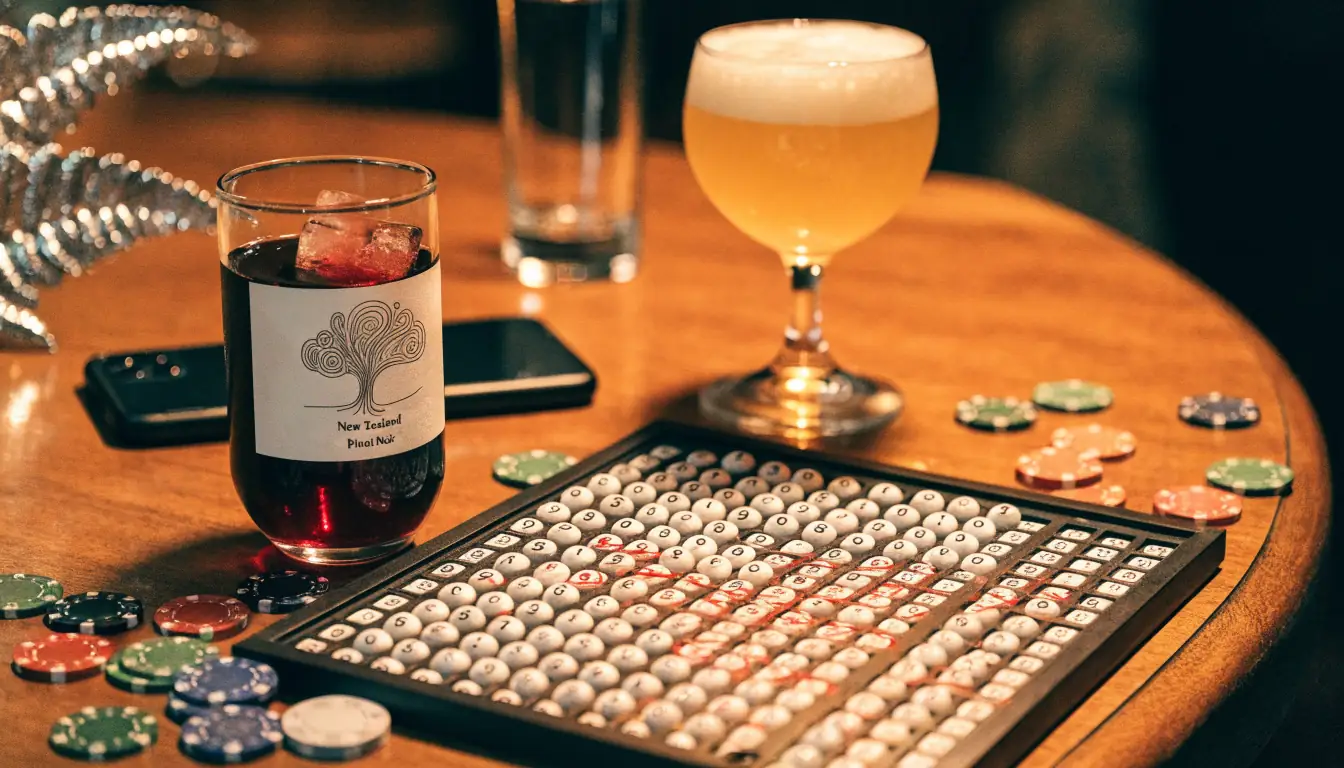
Practice can also reveal how much information the interface puts on screen at once. Some players may find a crowded layout difficult to read; others may need time to locate particular controls. A free mode gives an opportunity to observe these features without treating each interaction as a financial decision. That is a practical benefit, but it concerns familiarity with the presentation, not improved odds.
A free game can help identify questions that remain unclear. For instance, a player may notice that a table uses terms or indicators that require further explanation. The game itself should not be treated as a complete teaching resource: labels and animations can be brief, and a simulated sequence may not explain the reasoning behind the displayed outcome. Familiarity with a screen is not equivalent to understanding every bet.
What free play cannot establish
Free play cannot demonstrate that real-money outcomes will follow a pattern, nor can it predict the result of a future roll. Craps remains a game based on two dice; a practice session does not make a later result more likely to match what happened during practice. A run of apparent wins or losses in a free mode is not evidence of a reliable system.
Nor does a free version necessarily reproduce every feature of a real-money table. The available controls, pace, presentation or game variant may differ. A free game and a live-dealer table are also distinct experiences: a simulation cannot establish what the pace or interaction of a live table will feel like. Whether a free live option or a multiplayer version is available must be checked for the particular service rather than inferred from the existence of online craps.
- Use free play to familiarise yourself with the table layout
- Use practice to locate controls and betting areas
- Use simulation to observe the visual sequence of a round
- Assume free play predicts real-money outcomes
- Treat a practice win streak as evidence of a reliable system
- Expect a free simulation to reproduce the live dealer experience
The difference between free and real-money play is consequential. In free mode, a displayed wager does not place money at risk. That changes the conditions under which decisions are made and removes the financial consequences that accompany a real-money bet. As a result, practice may be useful for learning the layout or following a sequence, but it cannot show how someone will respond when a wager has actual value.
Free craps is therefore best understood as a limited familiarisation tool, where it is offered. It can reduce uncertainty about the interface and help expose gaps in understanding. It cannot verify a strategy, forecast outcomes or guarantee that the same table features will be available when play involves money.
New Zealand’s Online Casino Licensing Transition
Online craps in New Zealand in 2026 sits within a changing legal framework. The Online Casino Gambling Act 2026 took effect on 1 May 2026, establishing the country’s first domestic licensing system for online casino gambling. The Department of Internal Affairs (DIA) administers that system. Its introduction does not mean that licensed casino sites were immediately available: the regime has a transition period, and the first licensed services are expected to appear later.
The transition runs from the Act’s commencement until 1 December 2026. Operators that were already providing online casino services to people in New Zealand before 1 May may continue during this window, subject to the Act’s transitional provisions. At its end, operators without the required authorisation will no longer be permitted to serve New Zealand players. The date therefore marks a change in the status of providers, not a guarantee that every casino game will be offered by a newly licensed site on that day.

The new system is intended to create a domestic route for authorising online casino providers. The legislation allows for a maximum of 15 licences. That cap applies to the licensing framework as a whole; it does not establish that any particular operator will receive a licence or that every licensed provider will offer craps. A casino’s authorisation and its game catalogue are separate matters.
Timing also requires a distinction between the start of the licensing market and the arrival of operating sites. The licensed market is expected to begin around 1 December 2026, while the first licensed New Zealand online casino sites are anticipated during 2027. These are expectations about a staged transition, rather than evidence that licensed sites will all be operating as soon as the transition ends. In practical terms, a person looking for casino craps online during 2026 may encounter a different provider landscape from the one expected after licensing is established.
The Act changes the position of operators, but it does not make individual gambling with an unlicensed operator an offence. Before the new law, online casino services based outside New Zealand were not licensed or supervised by a New Zealand regulator, and customers using those services had no domestic government recourse. The distinction between an operator’s legal status and a customer’s liability is important: the transition sets conditions for providers, rather than creating a player offence for wagering with an unlicensed site.
Licensing Transition
After 1 December 2026, operators without the required authorisation from the Department of Internal Affairs will no longer be permitted to serve New Zealand players.
For live craps online, licensing should likewise be understood as a provider-level condition, not a statement about whether a particular live table is available. The framework covers online casino gambling; it does not establish that all licensed casinos will carry live dealer games, or craps specifically. Nor does the transition itself confirm the licensing status of a particular service. Until the regime is fully operating, the market remains in a period of change, with existing providers covered by transitional provisions and the future licensed offer still developing.
New Zealand’s licensing timetable therefore provides a boundary for assessing online casino play in 2026: the Act is in force, the transition ends on 1 December, and licensed services are expected to follow on a later schedule. For craps, those dates clarify the regulatory setting but do not determine which game formats or tables a licensed casino will provide.
The Come-Out Roll and the First Pass-Line Decisions
The shooter’s first decision is tied to a wager: a player must bet on either the Pass Line or the Don’t Pass Line to take the shooter role. The come-out roll is the opening roll for that wager. Its result determines whether the bet is settled immediately or whether a point is established and play moves into another phase.
The two line bets assess that opening result differently. A Pass Line wager wins if the come-out roll totals 7 or 11. A total of 2, 3 or 12 makes it lose. These are immediate outcomes: no point is carried forward from those rolls.

A Don’t Pass wager reverses the result on the principal totals that settle the bet at once. It wins on 2 or 3, but a 12 is a tie rather than a win or loss. A total of 7 or 11 makes the Don’t Pass wager lose. The distinction matters because a tie leaves the original stake unresolved for that roll, while the other listed results determine a win or loss.
The remaining come-out totals—4, 5, 6, 8, 9 or 10—establish the point. At that stage, neither line bet is decided by the opening roll; the game continues until either the point or a 7 is rolled. The point phase has its own outcome conditions, so it should not be confused with the immediate settlement rules of the come-out roll.
This sequence is the basic framework for craps play online as well as for a physical table: the shooter’s line wager is in place before the roll, and the opening total sorts the bet into an immediate result or continued play. Digital interfaces may display the chosen line and the roll result together, but the underlying distinction remains the same. The table’s presentation does not change what the come-out total means for either wager.
A useful way to learn craps online is to follow each roll in order rather than treating the dice total as an isolated result. First identify whether the wager is Pass Line or Don’t Pass. Then check whether the total produces a direct win, a loss or, for Don’t Pass on 12, a tie. If the total is one of the point numbers, note that the opening roll has set a condition for the next phase rather than settled the line bet.
Come-Out Roll
Place a bet on either the Pass Line or the Don’t Pass Line before the roll occurs.
The shooter rolls the dice to determine the come-out total.
Check if the total results in an immediate win, loss, or tie, or if it establishes a point for the next phase.
This also clarifies why the same roll can have different consequences for the two bets. A 7 is favourable to Pass Line and unfavourable to Don’t Pass on the come-out roll; 2 and 3 have the opposite effect. A 12 is not equivalent to 2 or 3 for Don’t Pass, because it ties. The opening decision is therefore not simply whether to back the shooter: it is a choice between two wagers with contrasting come-out outcomes.
The rules described here concern the line bets at the start of a round. They do not establish that a particular casino offers a free mode, permits play with other participants, or provides a specific table interface. Regardless of format, the first pass-line decision is governed by the selected wager and the come-out total.
What Happens After a Point Is Set
Once a point has been established, the Pass Line and Don’t Pass bets are decided by which comes first: that point or a seven. The same roll therefore has opposite significance for the two positions. If the shooter repeats the point before rolling a seven, the Pass Line wager wins and the Don’t Pass wager loses. If a seven appears first, the outcomes reverse: the Don’t Pass wager wins, while the Pass Line wager is lost.
This means that the point is not simply a target for every bet on the table. Its effect depends on the wager attached to it. A player following a Pass Line bet is waiting for the point to return; a player holding Don’t Pass is relying on a seven arriving before that happens. Until one of those numbers is rolled, neither wager has reached its final outcome.

The point phase also creates the opportunity to place Come bets. These are available only after a point has been set, rather than during the come-out roll. A Come bet wins when its point number is rolled before a seven. Its resolution thus follows the same basic race between a designated number and seven, though it is a separate wager from the original Pass Line bet.
Don’t Come bets are also restricted to the period outside a come-out roll. They resemble Don’t Pass bets, but are made during the point phase rather than on the come-out roll. This distinction concerns when the wager can be entered: the original Don’t Pass choice is made for the come-out, while a Don’t Come wager is available once that opening phase has ended. The bets should not be treated as interchangeable merely because their names and general orientation are related.
On an online craps table, the essential task during this phase is to track which wager is being resolved and which number matters to it. A Pass Line bet remains tied to the established point, whereas Come and Don’t Come bets are additional choices made after that point exists. The seven is relevant to both sides of the original Pass Line contest, but its consequence differs according to the bet: it ends the Pass Line wager unfavourably and the Don’t Pass wager favourably when it arrives first.
For a simple sequence, suppose a point has been set and the shooter rolls again. If the point appears before a seven, the Pass Line result is a win; if seven appears first, it is a loss. A Don’t Pass wager has the inverse result across those same two possible endings. This describes the order that settles the bets, not a prediction of which roll will occur.
Come bets and Don’t Come bets are only available after a point has been established; they cannot be placed during the come-out roll.
The same framework helps distinguish a new wager from an already active one. Come bets enter only after the point phase begins, and Don’t Come bets are likewise unavailable during a come-out roll. Their presence adds separate decisions to the table, but does not change how the original Pass Line or Don’t Pass wager is resolved.
Using Free Online Craps for Familiarisation
A free version of an online craps table, where one is available, can serve as a way to inspect the digital presentation before money is at stake. Its value is practical rather than predictive: it can make the table layout, on-screen controls and sequence of play less unfamiliar. Availability should not be assumed, since a casino may offer a free mode, a real-money game, or neither in a particular format.
Familiarisation can include identifying where the dice result appears, how the table displays the current state of play, and how a selection is made or removed. The exact interface varies, so practice with one table does not establish that another will look or operate in the same way. Where the display labels bets or marks a change in the game, a free session can help connect those visual cues with the progression of a round without requiring a real wager.
That exposure has a clear limit. A digital table uses a random number generator (RNG), while a live game uses real dealers. A free digital session may therefore help with the presentation of an RNG table, but it does not reproduce the setting or operation of a live table. Nor does playing without a stake establish how a real-money game will behave, or provide evidence about future results. Each roll remains uncertain; a short practice session cannot demonstrate a dependable pattern.

The distinction between free play and real-money play also concerns consequences. A practice balance is not money available for withdrawal, and a result shown in a free mode does not establish what a casino would credit or pay under real-money terms. The two settings may use similar visual displays, but the presence of a familiar interface does not make their financial conditions equivalent. Any terms attached to a casino’s free mode need to be read as applying to that mode, rather than presumed to describe real-money play.
For people seeking free online craps practice, the most defensible aim is therefore modest: become more comfortable reading a digital table and navigating its controls. Practice can reduce uncertainty about where information appears, but it cannot verify the integrity of a real-money game, predict a live dealer’s results, or show that a particular betting approach will succeed. Free online craps is best understood as interface familiarisation, not as a substitute for understanding the separate conditions of real play.
Assessing Craps Bets Without a Best-Casino List
Comparing craps bets is more informative when the comparison concerns their mathematical terms rather than a casino’s overall reputation. The Pass Line and Odds bets illustrate why: one has a stated house edge, while the other pays at true odds and has no house edge of its own.
The Pass Line house edge is 1.41%. A house edge describes the casino’s mathematical advantage in a wager over repeated play; it does not predict the result of an individual roll. A single outcome can differ from the long-run expectation, and the figure is not a promise about what any particular session will return. It is a way to assess the bet’s built-in cost under the stated rules.
Mathematical Comparison
- The Pass Line bet has a house edge of 1.41%.
- Odds bets pay at true odds and carry no house edge of their own.
- The Odds bet does not remove the house edge from the underlying Pass Line bet.
- Mathematical terms remain the same regardless of the table format (digital or live).
The Odds bet has a different property. Its payout follows the true odds of the outcome, so the wager itself carries no house edge. That does not make every wager placed at a craps table edge-free. The Pass Line and Odds components should be considered separately: the Odds bet does not remove the house edge attached to the underlying Pass Line bet.
This distinction is useful when evaluating online craps betting. A table’s presentation, whether digital or live, does not by itself change the mathematical terms of these bets. Nor does a low deposit alter a bet’s house edge or payout basis. Deposit conditions concern access to play; the house edge and true-odds payout concern the wager. They answer different questions.
The same separation applies to the search for the best online craps games. “Best” can refer to a preferred interface or format, but those qualities do not establish that the underlying bets are more favourable. For a mathematical comparison, the relevant question is what edge applies to each wager and how its payout is calculated. On the stated terms, the Pass Line carries a measurable edge, whereas Odds are paid at true odds.
Free play can help make the table sequence more familiar, but it does not change these mathematical properties. A free version, where available, is not evidence that real-money wagers have different terms. Familiarity with the interface and an understanding of the bet’s expected cost are separate forms of information.

The distinction matters because a favourable feature in one bet cannot be treated as a guarantee of favourable results across the game.
Odds, Commissions, and the Limits of Craps Strategy
Craps strategy is constrained by the terms attached to particular wagers, not just by the choice of a betting pattern. Odds are a distinct wager that may be added only after a qualifying Pass or Come bet. The additional stake is also capped at a multiple of the initial bet, so it cannot be increased without limit. The applicable cap can affect how much of a bankroll can be placed at true odds, and it may differ between tables.
The Odds bet has no house edge and pays according to true odds. That describes the mathematical terms of the additional wager; it does not mean that the full betting position has no house edge or that a session is guaranteed to end ahead. The underlying Pass or Come bet remains part of the position. Assessing the Odds wager in isolation can therefore give an incomplete picture of the costs and risks of a strategy.
Buy bets have a different cost structure: they require a commission of 5%. That charge matters when comparing the potential return with the amount staked. A strategy that includes a Buy bet needs to account for the commission, rather than treating the quoted payout as the entire calculation. The presence of a commission does not, by itself, establish whether a particular wager is worthwhile; that depends on its terms and on the comparison being made.
Attention Buy bets require a commission of 5%, which must be accounted for when comparing potential returns with the amount staked.
These conditions also define what online craps practice can establish. A practice table may help with recognising where an Odds or Buy wager fits into a sequence, if those options are available in that game. It cannot show that a chosen system will overcome the house edge, nor does a successful practice session establish likely real-money results. The actual table rules and wager limits remain relevant when evaluating a strategy.
Accordingly, a defensible assessment separates the mathematical property of a specific bet from claims about a broader system. Odds have no house edge and pay at true odds, but access follows a qualifying Pass or Come bet and is limited by a cap. Buy bets carry a stated commission. Neither condition supports a guarantee of profit, and practice craps online cannot change those underlying terms.
RNG Tables and Live Craps Simulators
Online craps can present outcomes through a digital table using a random number generator, or through a live game run by real dealers. These are different ways of producing the game’s outcomes; the distinction is about the format, not a separate set of betting rules.
At a digital table, the outcome is generated by an RNG rather than by a live dealer. The table is therefore a software-based simulation of craps. Its on-screen presentation may resemble a physical table, but the displayed game remains digital. The term “simulator” describes this format: the game is presented through software, with the RNG determining outcomes.
A live table uses real dealers instead. This makes the format distinct from a digital simulation, even though both are offered as online craps. The presence of a dealer does not, by itself, establish anything about the game’s rules or the terms attached to a wager. Those matters are separate from how outcomes are produced.
The two formats should not be treated as interchangeable evidence about one another. A digital table uses an RNG; a live game uses real dealers. Seeing one format does not show how the other operates, and the label “live” does not mean that a digital table has become a live game. Likewise, describing a game as a simulator identifies its software-based format, not a claim about the quality or reliability of a particular table.
This distinction can help clarify what an online craps offering represents before its other features are considered. The format alone does not establish whether a game is available for free or for real-money play, nor does it indicate how a particular wager is settled. Those questions require separate information. For the narrow question of outcome production, the relevant distinction is straightforward: RNG-based digital tables on one side, and live games involving real dealers on the other.
Real-Money Craps and Wagering Requirements
When craps is played for money, a wager may also be subject to a casino’s wagering requirements. These terms set out which real-money bets count toward a promotional requirement and how much they contribute. The treatment of craps is not uniform across casinos, so a game’s availability does not establish that its wagers qualify in full.
A specialist review reports that some New Zealand casinos give craps only partial credit toward wagering requirements, with Pass Line and Don’t Pass wagers identified as possible qualifying bets. This is a qualified account, not a rule applying across the market. The same type of review describes craps contributions as lower than those for pokies, but that comparison should not be treated as a settled or permanent standard. Promotional terms can differ between casinos and may change.
The practical distinction is between wagering with cash and playing online craps for fun. Free play does not satisfy a real-money wagering requirement because it does not involve qualifying cash wagers. Conversely, a real-money bet should not be assumed to count simply because it is placed in a casino game. The relevant promotion terms determine whether craps is included and whether it receives full or partial credit.
This distinction matters when assessing a promotion’s conditions: the headline offer alone does not show how a particular craps wager will be treated. Where the terms are unclear, the available evidence does not support assuming that craps contributes at the same rate as other casino games.
Are online casinos legal in New Zealand?
Yes, individuals in New Zealand do not commit an offence by gambling at an online casino. The licensing regime is expected to begin around 1 December 2026, with the first licensed sites expected to go live during 2027.
Is it legal for New Zealand players to gamble at offshore online casinos?
Yes, gambling with an unlicensed operator is not an offence for consumers in New Zealand. However, after the licensing transition ends in December 2026, unlicensed operators cannot serve New Zealand players.
What is online craps?
Online craps is a dice game in which players bet on the outcome of rolls made with two dice. Digital tables generate rolls with an RNG, while live games use real dealers.
Can I play for free?
Yes, if the casino offers a free-play version of its craps game. It can help you get familiar with the betting areas and how a round is presented.
Can I use bonuses on craps?
Sometimes. Craps may count only partly towards wagering requirements, and some casinos allow it for lower-risk bets such as Pass or Don’t Pass.
Created by the ”Casino Experts NZ” editorial team.